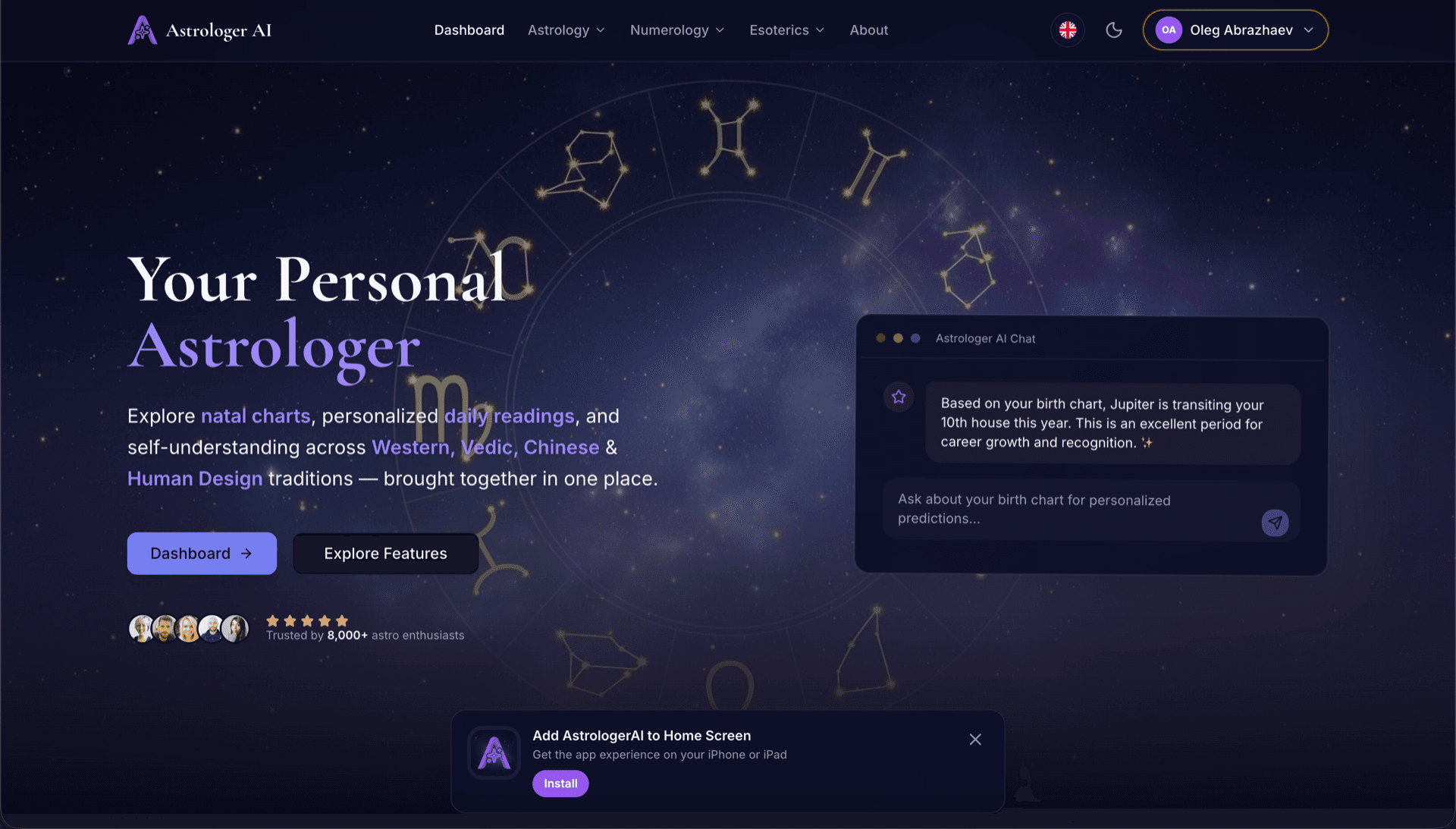
AstrologerAI: an AI astrology app localized into 52 languages
How the AstrologerAI app translated its entire experience into 52 languages with LocalePack — 6.3M tokens for $58.73 — to reach a worldwide audience in their own language.
Upload your source messages.json, pick target languages, pay once, and download a ready-to-ship _locales ZIP.
Three simple steps to localize your Edge extension. Translations run after payment—we queue jobs and generate the ZIP in minutes.
Drop your source messages.json file. We parse it instantly and validate the Edge extension format.
Choose from 52 languages. See transparent pricing based on your file size before you pay.
Pay once via Stripe. We generate all _locales/{lang}/messages.json files and bundle them into a ZIP.
See exactly what you'll pay before uploading. Final quote is computed after upload based on string length and languages selected.
Drop messages.json here
or click to browse
Edge extension format only. Max 500KB.
3 of 55 languages selected
Final price calculated after file upload on checkout page
One-time payment • No subscription
Purpose-built for Edge extension locale format. Not a generic translation tool.
Built specifically for Edge extension messages.json structure with message, description, and placeholders support.
Preserves $PLACEHOLDER$ syntax exactly as-is. Your variables stay intact across all languages.
We read your description fields and use them as context hints for more accurate AI translations.
Download a ZIP with correct _locales/{lang}/messages.json folder structure. Drop it into your extension.
All languages are translated simultaneously. Most jobs complete in under 5 minutes.
No subscriptions, no monthly fees. Pay once per job, download forever.
Microsoft Edge extensions use the identical Chromium i18n format — the same _locales/{locale}/messages.json structure as Chrome. If your extension already targets Chrome, the LocalePack output works for Edge without any modification.
_locales/
├── en/
│   └── messages.json   ← default_locale
├── de/
│   └── messages.json
├── fr/
│   └── messages.json
└── ja/
└── messages.json{
"appName": {
"message": "My Extension",
"description": "Extension name"
},
"greeting": {
"message": "Hello, $USER$!",
"placeholders": {
"user": { "content": "$1" }
}
}
}Runtime API
chrome.i18nExample call
chrome.i18n.getMessage("appName")Required in manifest
"default_locale"Edge is built on Chromium. Any _locales ZIP that works for Chrome will work for Edge as-is.
The Microsoft Edge Add-ons store reads _locales/ to display localized extension names and descriptions to users browsing the store in their language.
Edge extensions use the identical Chromium i18n format. That means the compatibility is total — and so are Chrome's constraints.
Because Edge inherits Chromium's behaviour, it also inherits the silent failure: an unsupported locale folder is ignored rather than reported.
General-purpose translation tools don't understand Edge extension format.
LocalePack | Manual translation | Generic TMS | |
|---|---|---|---|
| Setup time | 2 minutes | Hours per language | 30+ minutes |
| Cost transparency | |||
| Edge format safety | |||
| Placeholder protection | |||
| Speed (52 languages) | < 5 min | Weeks | Hours |
| Best for | Edge extensions | Small projects | Enterprise web apps |
Real projects that used LocalePack to reach a global audience in up to 52 languages.
How the AstrologerAI app translated its entire experience into 52 languages with LocalePack — 6.3M tokens for $58.73 — to reach a worldwide audience in their own language.
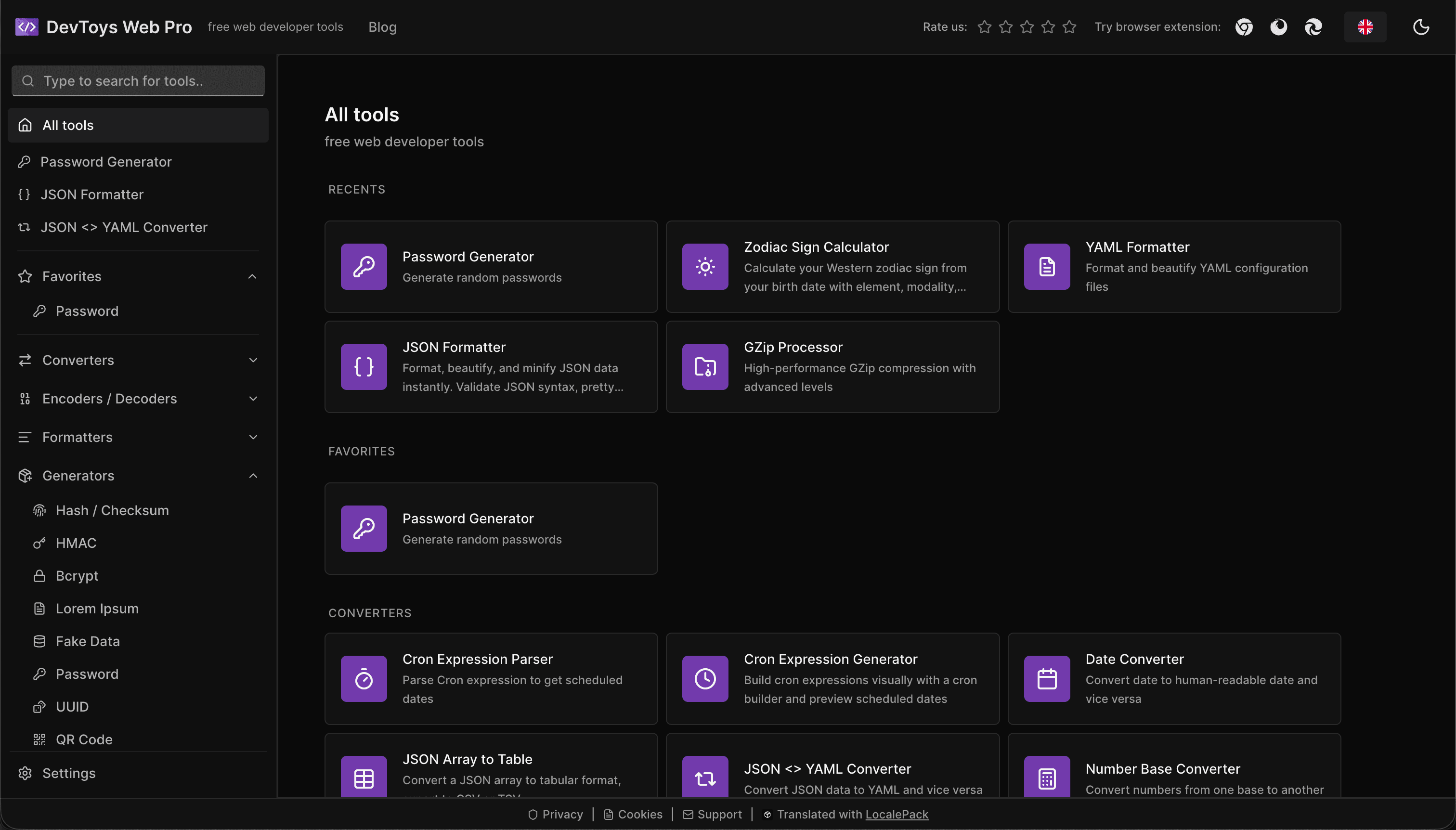
How the DevToys.pro web app translated its entire UI into 52 languages with LocalePack — 5.8M tokens for $58.44 — and quadrupled its international organic traffic.
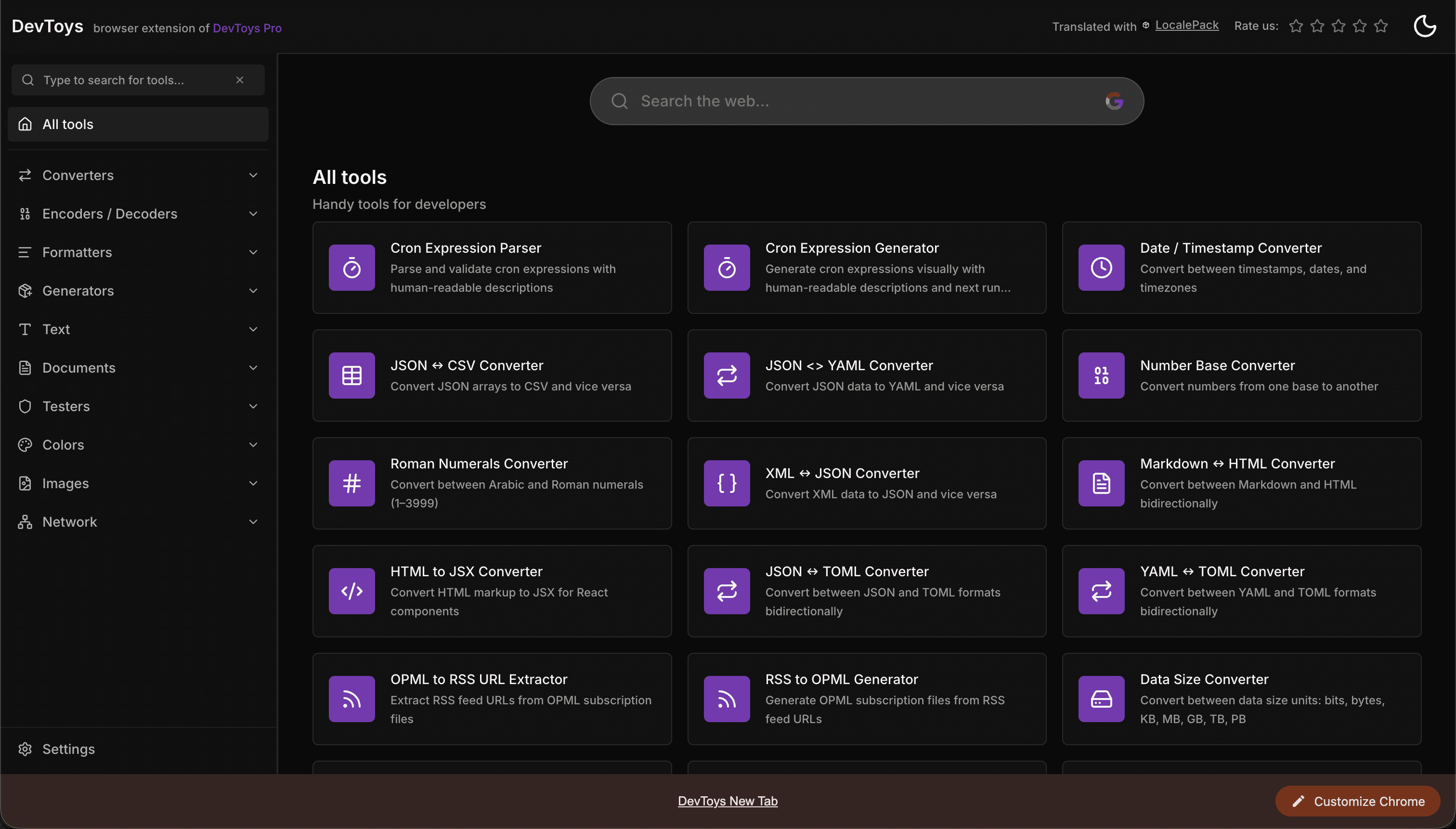
How the DevToys New Tab Chrome extension localized both its in-extension UI and its Chrome Web Store listing into 52 languages to reach a global audience.
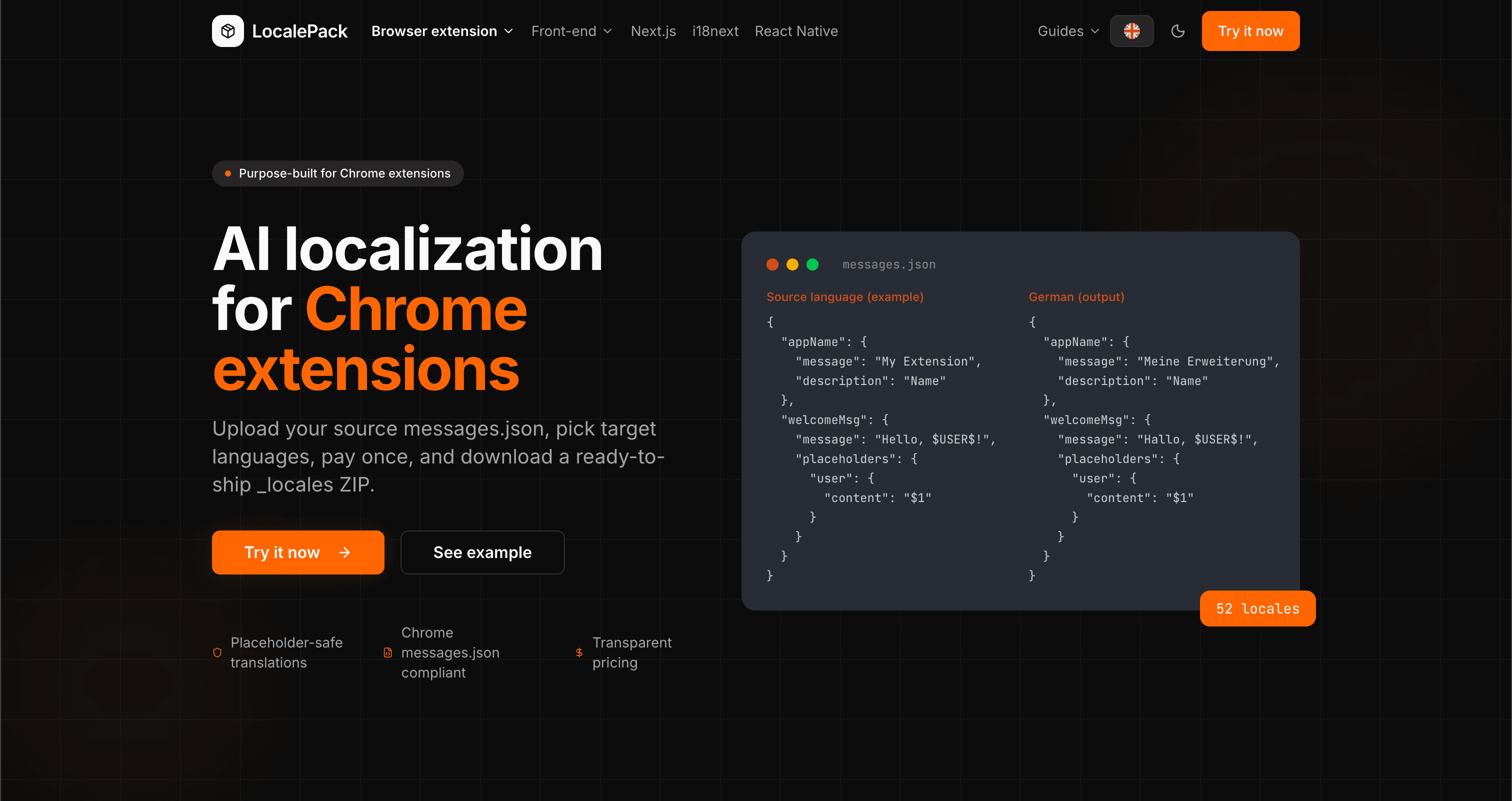
We used our own tool to translate the entire LocalePack site into 52 languages — 2.9M tokens for $27.37 — so developers worldwide find us in their own language.
“Saved me hours of tedious work. Uploaded my messages.json, got back perfect translations in the exact format I needed.”
Sarah K.
Indie dev, AdBlock extension
“Finally a tool that understands Edge extension format. No more fixing broken placeholders after translation.”
Marcus T.
Extension maintainer
“Transparent pricing was the selling point. I knew exactly what I'd pay before uploading anything.”
Dev J.
Open source contributor
52
Locales supported
100%
Placeholder-safe output
ZIP
Ready to ship
Everything you need to know about LocalePack.
Deep dives on the formats, APIs and errors behind this page — written for developers, not translators.
How to set up the _locales folder, what default_locale does in manifest.json, and how Chrome picks the right messages.json at runtime.
Why Partner Center shows only one listing language even when your package ships twenty, how __MSG_ manifest references drive language detection, and which listing fields Edge requires for every language versus just one.
All four chrome.i18n methods with exact signatures and return types: which are synchronous, which return promises, what getMessage() returns when it fails, and how browser.i18n differs in Firefox and Safari.
Every locale code Chrome accepts as a _locales folder name, with language and native names, the underscore-vs-hyphen trap that makes pt-BR silently ignored, and how Chrome picks a locale at runtime.
How to catch every class of messages.json error before your users do: JSON syntax, missing required fields, missing keys across locales, malformed placeholder syntax, and manifest key mismatches.